National Blood Donors Month is a time to celebrate the unsung heroes who selflessly contribute to this life-saving cause and raise awareness of the growing need for more blood donors. Blood is a lifeline for our health, carrying nutrients to different parts of our bodies. Blood transfusion is used to help injured and ill individuals maintain healthy blood flow levels during medical treatment or surgery. Each year, 30 million units of blood are transfused to patients in the US who need it. This blood comes from 6.8 million generous donors. However, these donors only make up 3% of the age-eligible population. As we celebrate blood donors and discuss the intricacies of the blood donation process, we encourage you to consider joining the ranks of those who are making a difference — one pint at a time.
History of National Blood Donors Month
In 1970, January was named National Blood Donors Month, to remind people of the necessity of blood donation. This campaign emerged with a multifaceted purpose. Its primary goal is to celebrate and thank blood donors for their generous donations. Its secondary goal is to raise awareness about the perpetual need for blood and encourage individuals to become blood donors.
The month of January was chosen for this campaign because blood donations typically slow down during the holiday season, reducing the amount of red blood cells and plasma that is available for medical treatments. This often leads to blood supply shortages in the first few months of the year, which can be detrimental to the health and safety of individuals in need. To combat this reduction, healthcare organizations, blood banks, and other advocacy groups collaborated to create a campaign to celebrate the blood donors from the prior year and encourage others to join in. Though blood donation is a year-round necessity, the month of January serves as a dedicated time to amplify the message of blood donation, encouraging regular donors and newcomers to contribute.
The Profile of a Typical Blood Donor
Blood donors are a diverse group of individuals, coming from various backgrounds, professions, and age groups. The American Red Cross, the leading blood bank in the US, has set base requirements for donation to protect the health and safety of both donors and recipients. For whole blood donation, individuals must weigh at least 110 lbs, be in good health, and be at least 16 years old. These donors can donate every 56 days, up to 6 times a year. For platelet donation, individuals must also weigh at least 110 lbs, be in good health, and be at least 17 years old. These individuals can donate more frequently, every 7 days up to 24 times a year. Plasma donation is available only for individuals with AB blood type and can be done every 28 days, up to 13 times a year.
Beyond the personal requirements, the American Red Cross also sets other standards for donation. Taking some medications or having certain infections may require deferment for a certain amount of time. Additionally, individuals with certain conditions, like AIDS, may be ineligible for donation. Consult the American Red Cross eligibility list for the current set of requirements and disqualifications.
While there is no “typical” blood donor, these individuals share a set of characteristics: compassion, altruism, and a sense of responsibility toward their communities.
Blood Donation Process
Becoming a blood donor is a simple process, designed to ensure ease and safety for donors and recipients. The process starts by arriving at a donation center or blood drive. Many employers host blood drives through mobile medical services throughout the year to give back to the community. Once at the blood drive, individuals will go through a brief medical history questionnaire and a mini-physical to ensure their eligibility. Once cleared, individuals can proceed to donate.
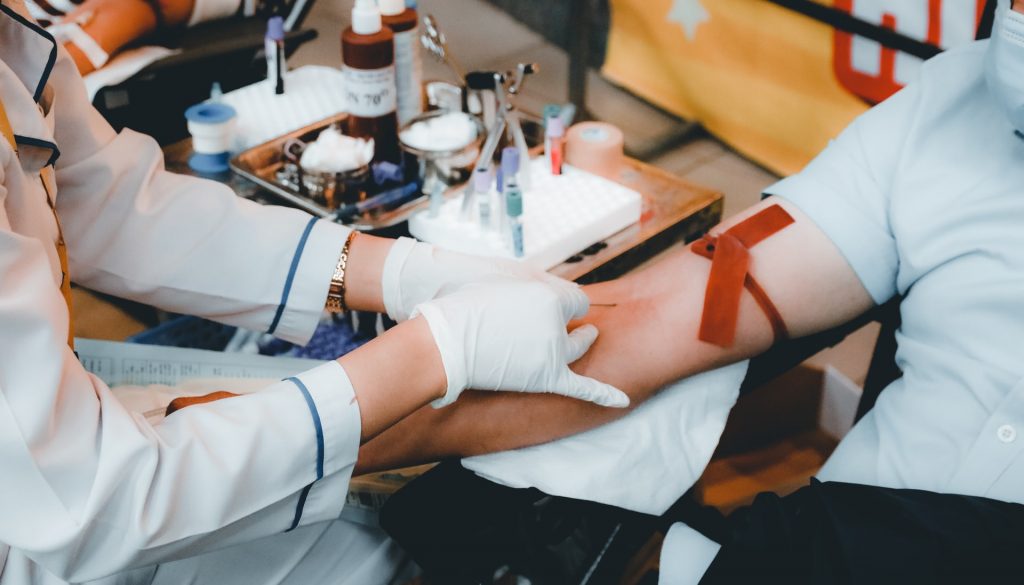
Donors then move to the donation chair, where a sterile needle is used to collect a unit of blood. This process only takes a few minutes. During the blood donation, the collector will encourage donors to relax and rehydrate to combat any negative effects. After the unit of blood is collected, donors are provided with snacks and drinks to replenish their energy. Donating blood can cause lightheadedness; this is normal, but it is important to utilize the provided refreshments to bring your strength up.
In celebrating the blood donation process, National Blood Donors Month seeks to empower individuals to take a step toward making a tangible difference in the lives of those in need. Be a hero today by donating blood to those in need!
We Can Help!
Work Health Solutions offers comprehensive healthcare solutions for your medical needs. Our qualified team treats patients and employers alike and always provides top-quality service. We back our quality service with years of experience. We have worked with academic and research institutions, corporate healthcare, Fortune 25 companies, small governments, and local businesses. Reach out today with any questions about how we can assist you!